

The Big E
11/11 sectors grew revenue, AI providers are still losing money, and California's housing plan is now inheritance.

Welcome to this week’s edition of The Macro Obsession.
The best round-up of current events and trends in finance, tech, and the real economy currently in your inbox!
Issue #58—Week of August 10th, 2026
Nonstop Earnings For Everyone, Everywhere
Large Language Payoff
Homes, Three Ways
Nonstop Earnings For Everyone, Everywhere
One of the recurring themes of my market commentary this year has been The Big E in P/E. As much as other commentators want the all-time highs hit this week being attributed to AI, the whole market is on fire with earnings excitement. There is actual breadth at play, which tells me it’s not a one-sided story.
Corporate earnings are ultimately the driver of markets and for that reason, I am very bullish. This market is seeing revenue growth in 11/11 sectors.
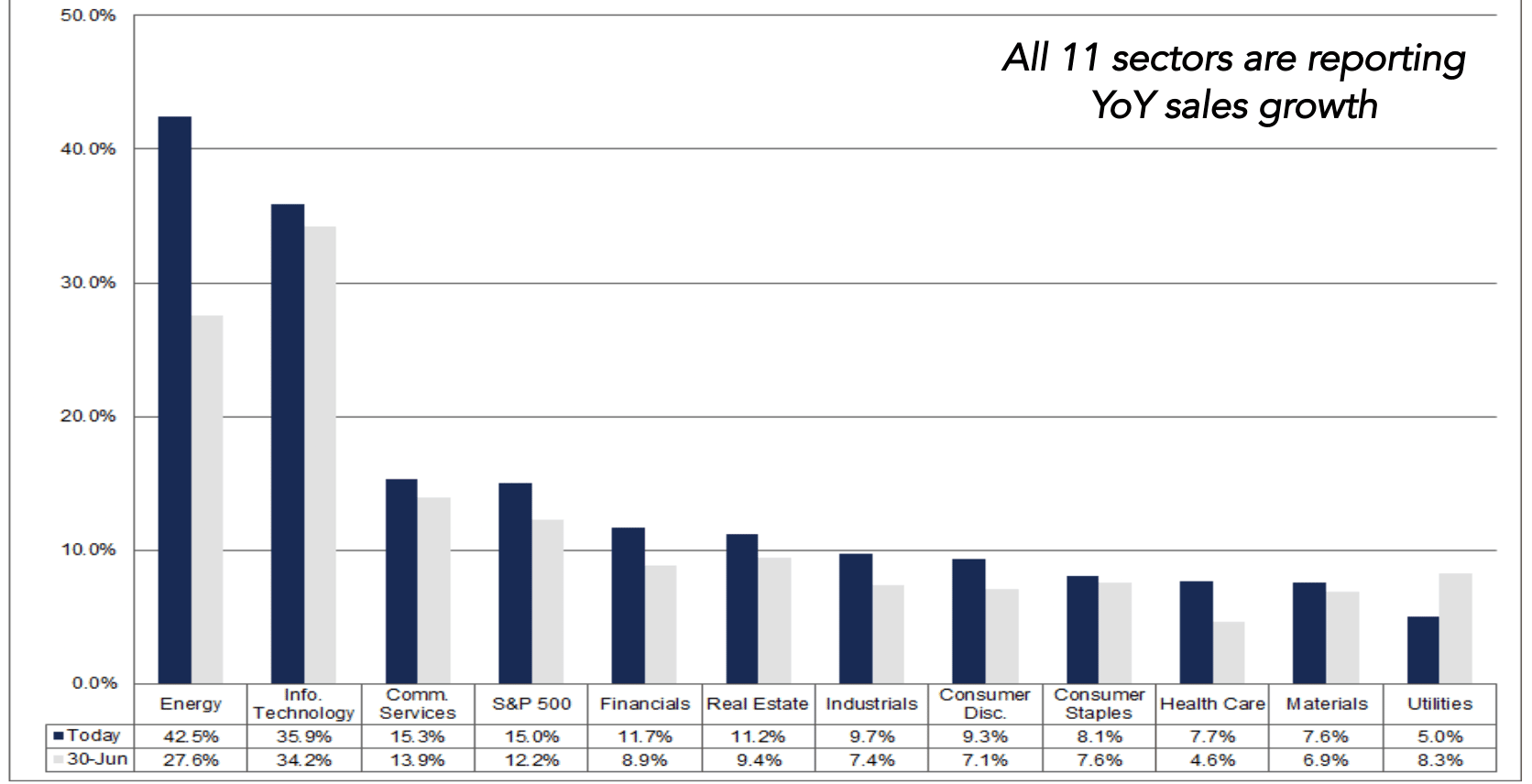
Tech lost its throne this quarter, although energy’s time in the sun will likely be shortlived. The difference is consistency, one of the reasons TMO is nearly perma-long tech. The profit dynamics that allowed tech companies to become such highly capitalized corporations are amplified by the introduction of artificial intelligence.
In a more quippy form that you may have heard before:
Software ate the world, and AI is eating software.
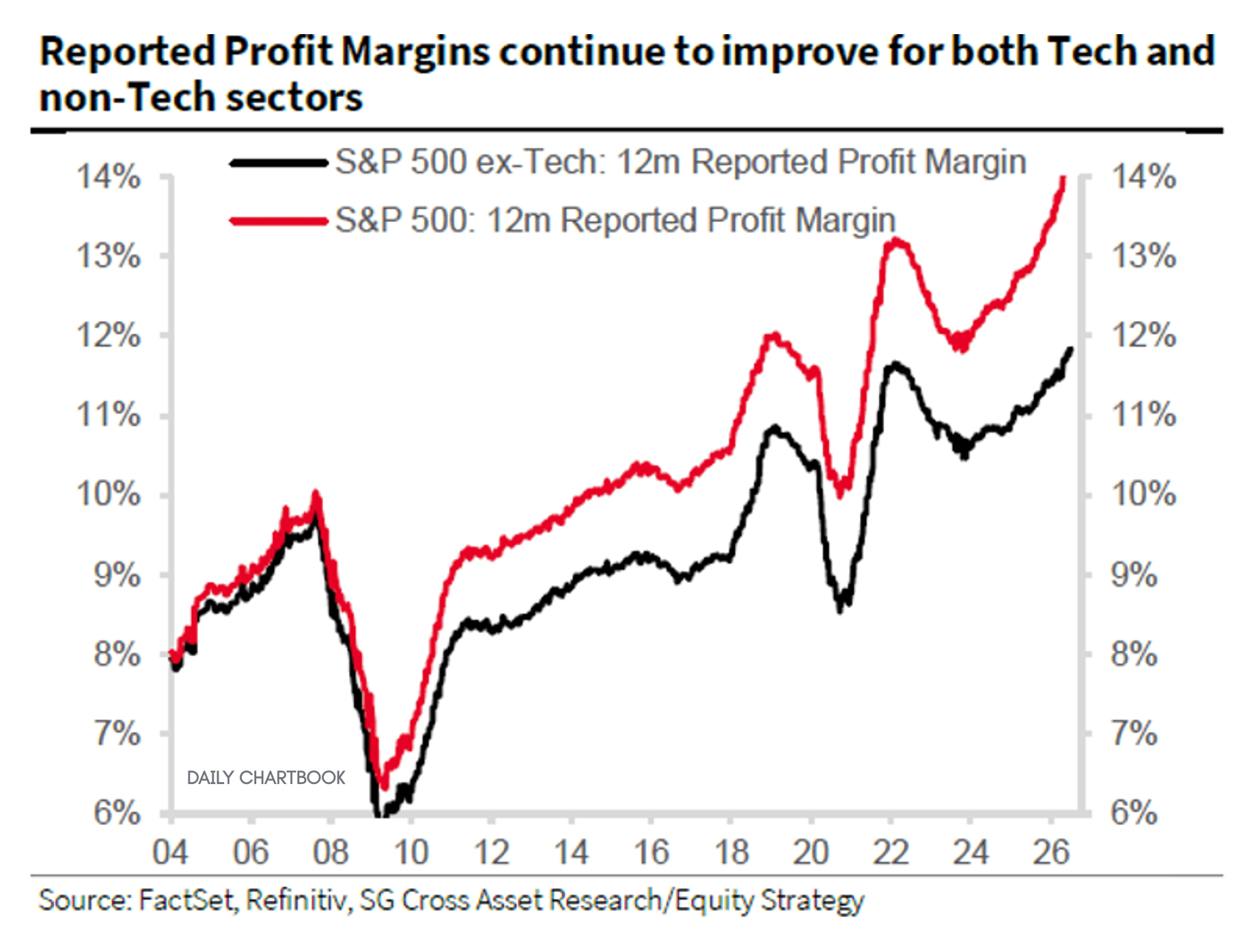
See profit margins, one of the metrics I believe matters greatly to this market, and so to be bullish on tech, one has to be bullish on its profit margins. Profit dynamics dictate that in low marginal cost products like software/compute output, net margin growth is critical to sustain growth at a global scale.
There’s a reason that Big Tech is priced like it is and it’s not irrational.
It’s because of this:
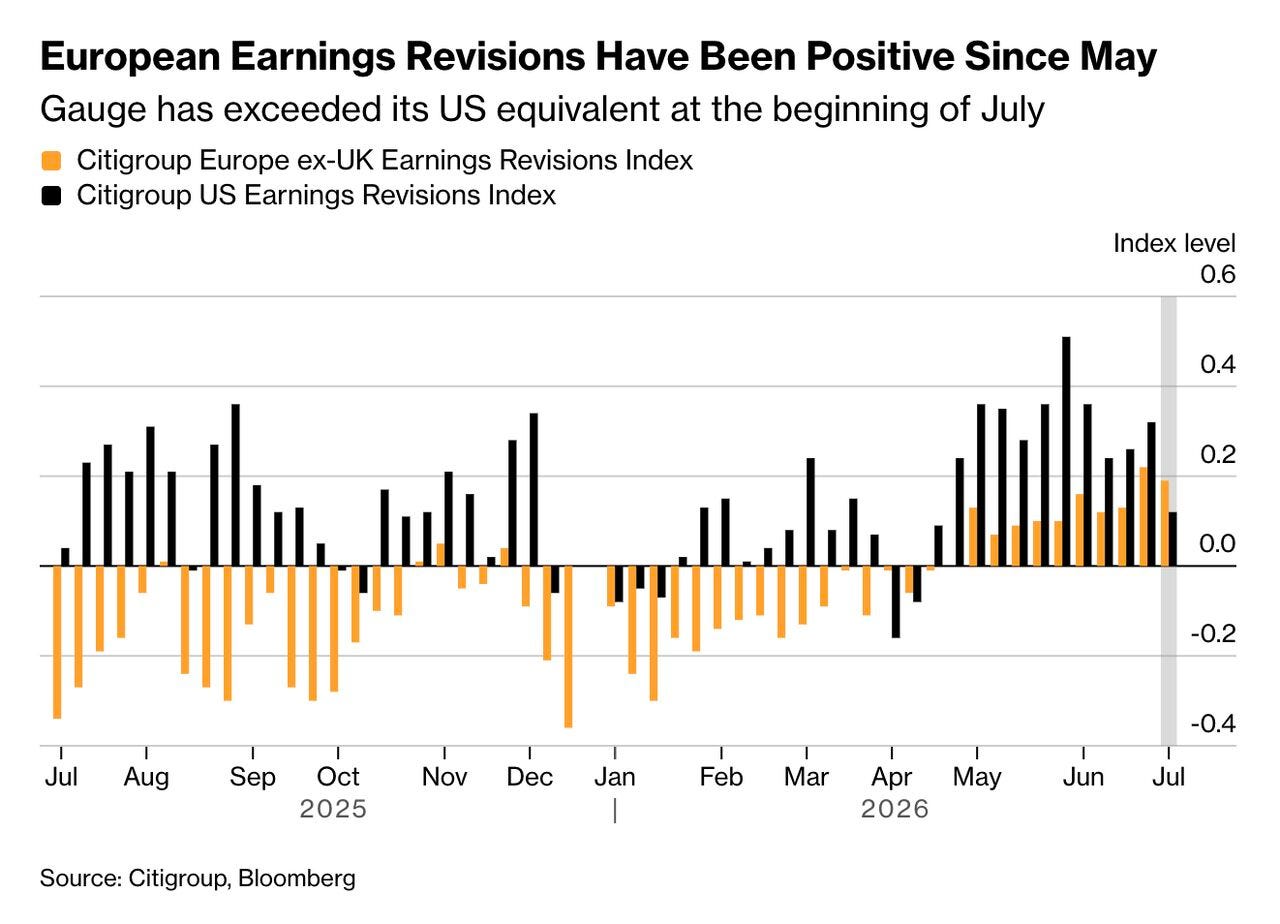
It’s not just the U.S., either. Even the Europeans are seeing positive earnings revisions, with analysts raising expectations consistently since May. This past quarter was great for business growth, despite the energy shock.
The natural question that I am still grappling with, because I am not satisfied with my current answer—the skeptics among my readers have been yelling this at their screens for a moment I’m sure.
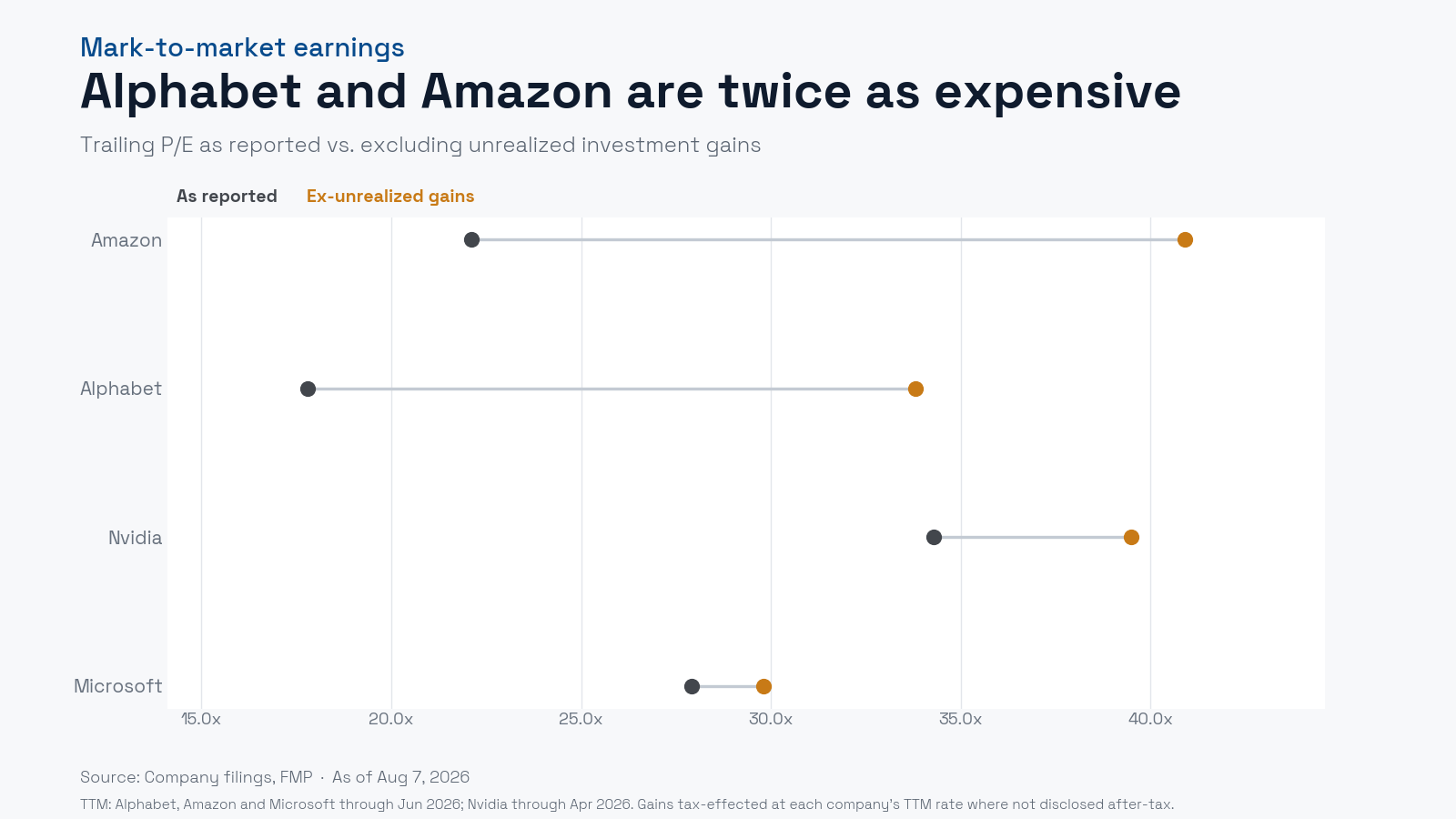
What if we’re in an earnings bubble? It’s all paper investment gains in private AI labs, pledges that can show as earnings today but won’t materialize once the AI bubble pops. Big Tech is saddled with more compute than God but nobody who cares to buy it. If the earnings are fake, then P/E can just equal zero.
I’m still grappling with it, honestly. I’m staying long tech for now, but I can confirm that they are holding a lot of paper gains in the private AI labs. That part is absolutely true and a little scary.
Know what you are buying with and without Anthropic and OpenAI gains included.1
Think TMO is neat? Send it to a buddy!
Large Language Payoff
Fun fact: the average American household with members that pay for AI tools spends ~$31 annually on these tools. That’s just a little more than a base Claude subscription, suggesting that those who are using tools are using more than one.
What was interesting to me was to see how quickly the number of paying households has been rising, but also how low the absolute number is. It currently sits at 2.2%.
If you currently pay any amount for any AI tool, you are in the top 3% of the U.S. in something.
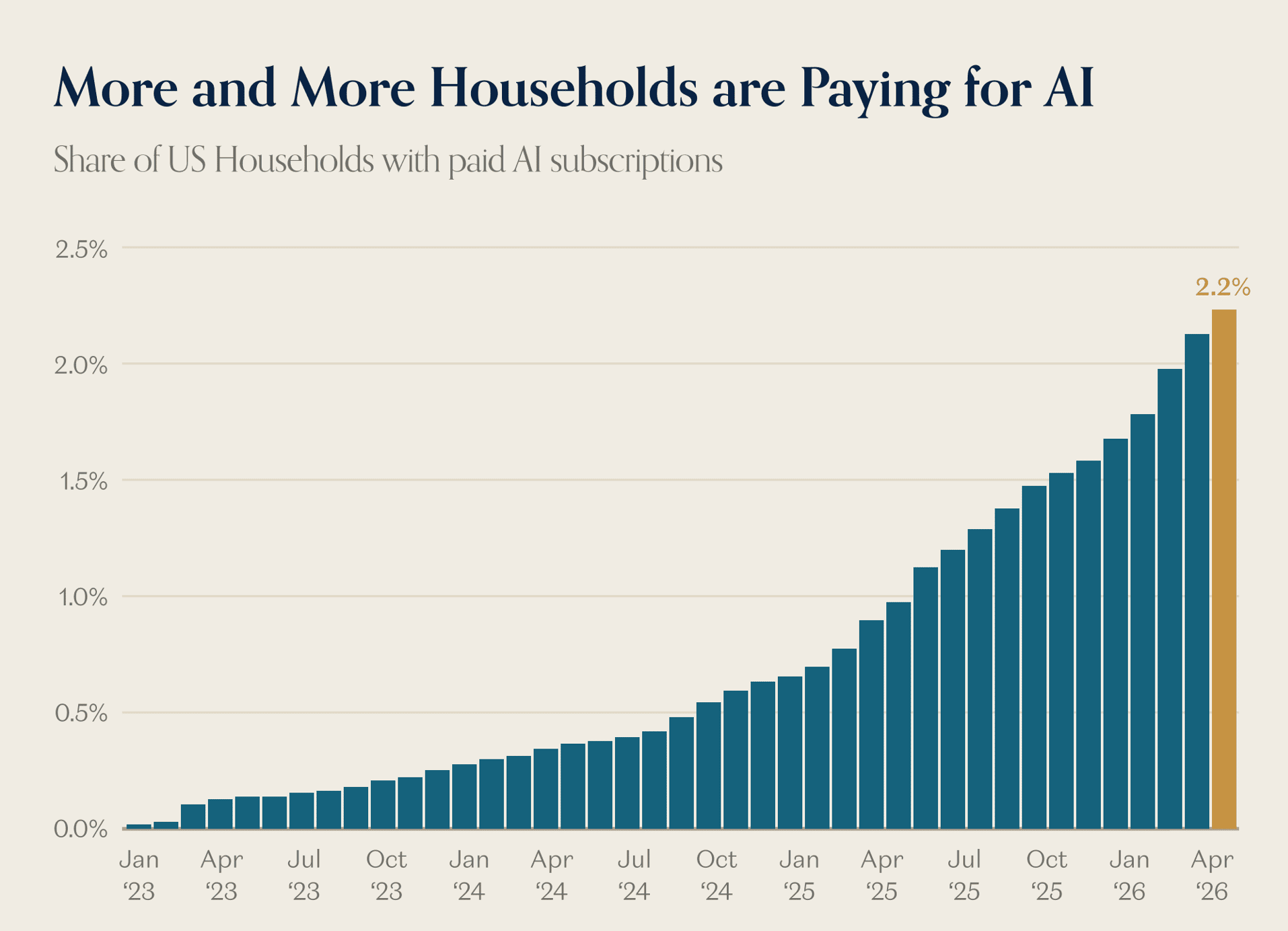
I know that most people who use these tools do so through work, not necessarily at home, but I’m still surprised by how low it is. Perhaps it’s because I’m overestimating what counts as an “AI subscription” or just perhaps because of the crowd I interact with most.
Do video and sound-editing tools like the Adobe podcast suite count? I would say so, because everything you can do is done algorithmically or via an LLM. But perhaps the survey doesn’t count it because they’re content production tools. Maybe they are only counting LLM subscriptions and the like. I would assume the latter for now.
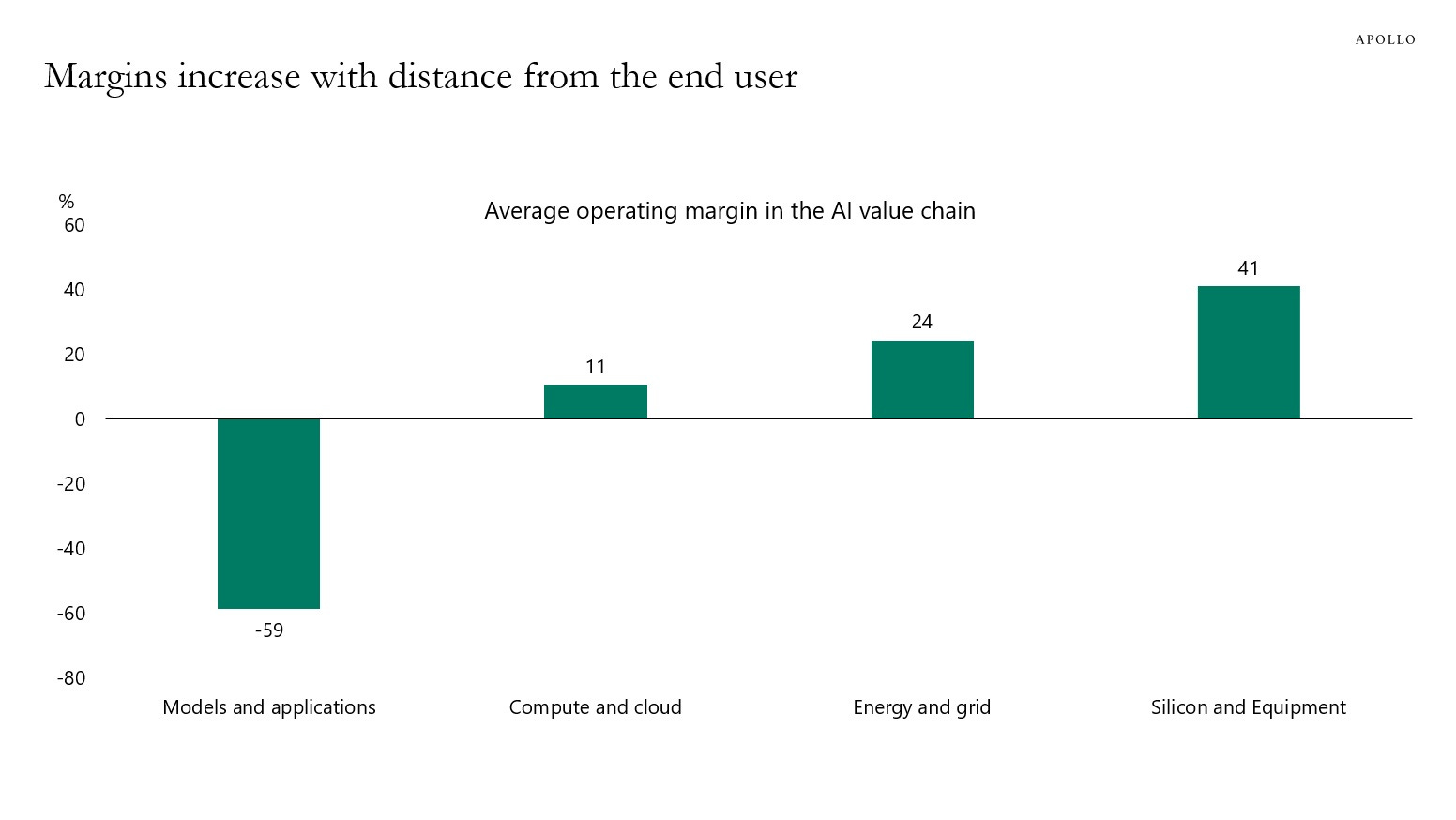
Regardless, the point I wanted to make is that the model providers are still in the economic toilet largely because they need that number to be way, way, way higher.
Reminder that the further one gets away from the actual AI product, the more profitable their business is. The frontier labs are subsidizing their end heavily to lure in users and break some kind of critical mass of users.
This is a little backwards from how things usually are, but the AI-optimists believe this dynamic changes in a few years. We’ll see.
More Below, But ICYMI


Homes Three Ways
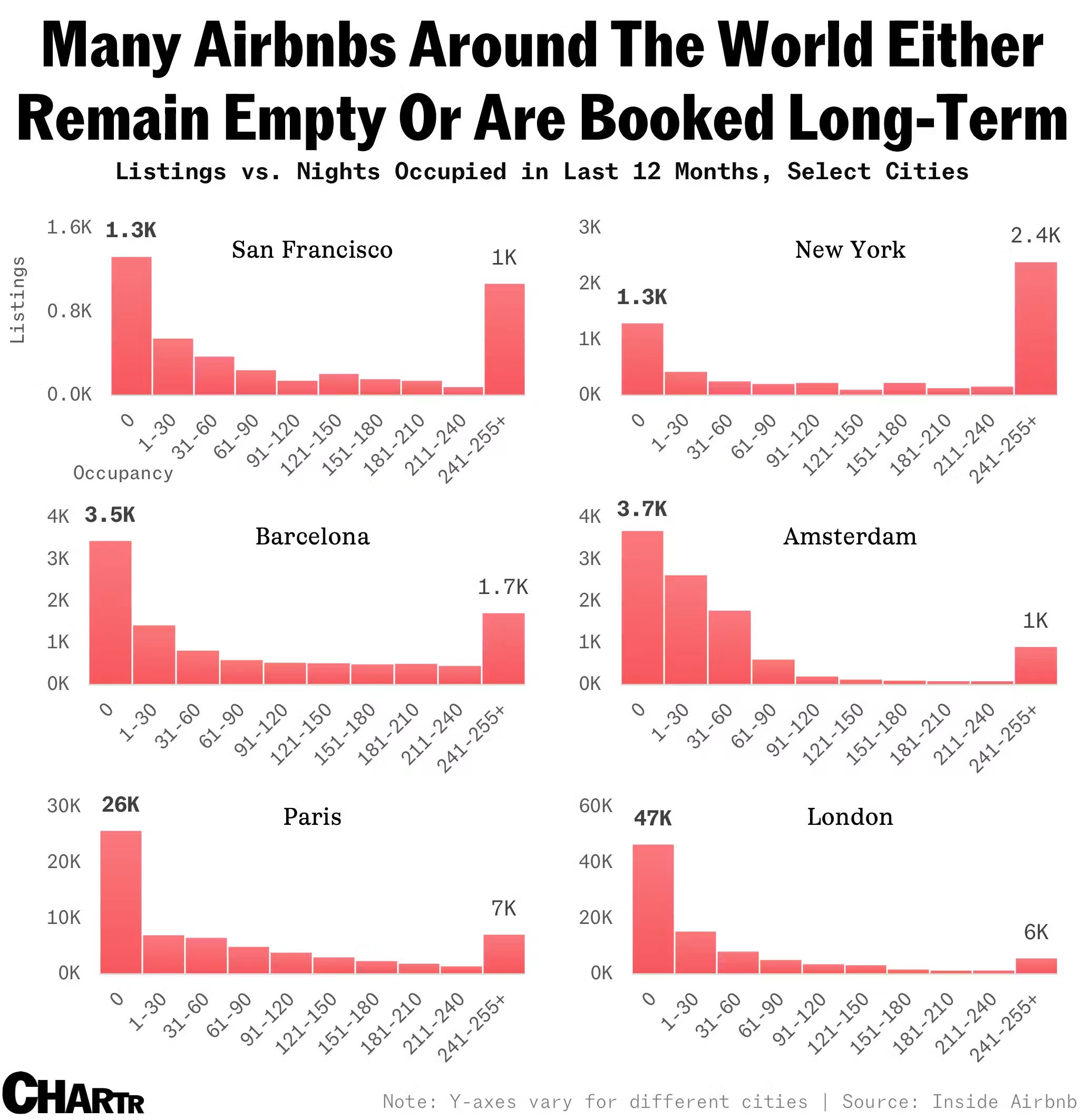
Our first chart in our economy section comes from Airbnb (ABNB 0.00%↑) , which popped tremendously on Friday in the stock market. It hasn’t been this close to its IPO peak since, well, its IPO.
But I’m bringing it up because it’s got this interesting dynamic going on, which does not seem to be working as intended for many of the hosts on the app.
Apparently, there are power laws going on here. The sheer amount of empty homes is staggering. The ones that aren’t empty are revolving doors.
The second chart I can already see being one of my new favorites to discuss with my fellow Californians when housing comes up. The share of new homeowners coming from inheritance is at a new high. It’s now at nearly 1/5 transfers and growing.
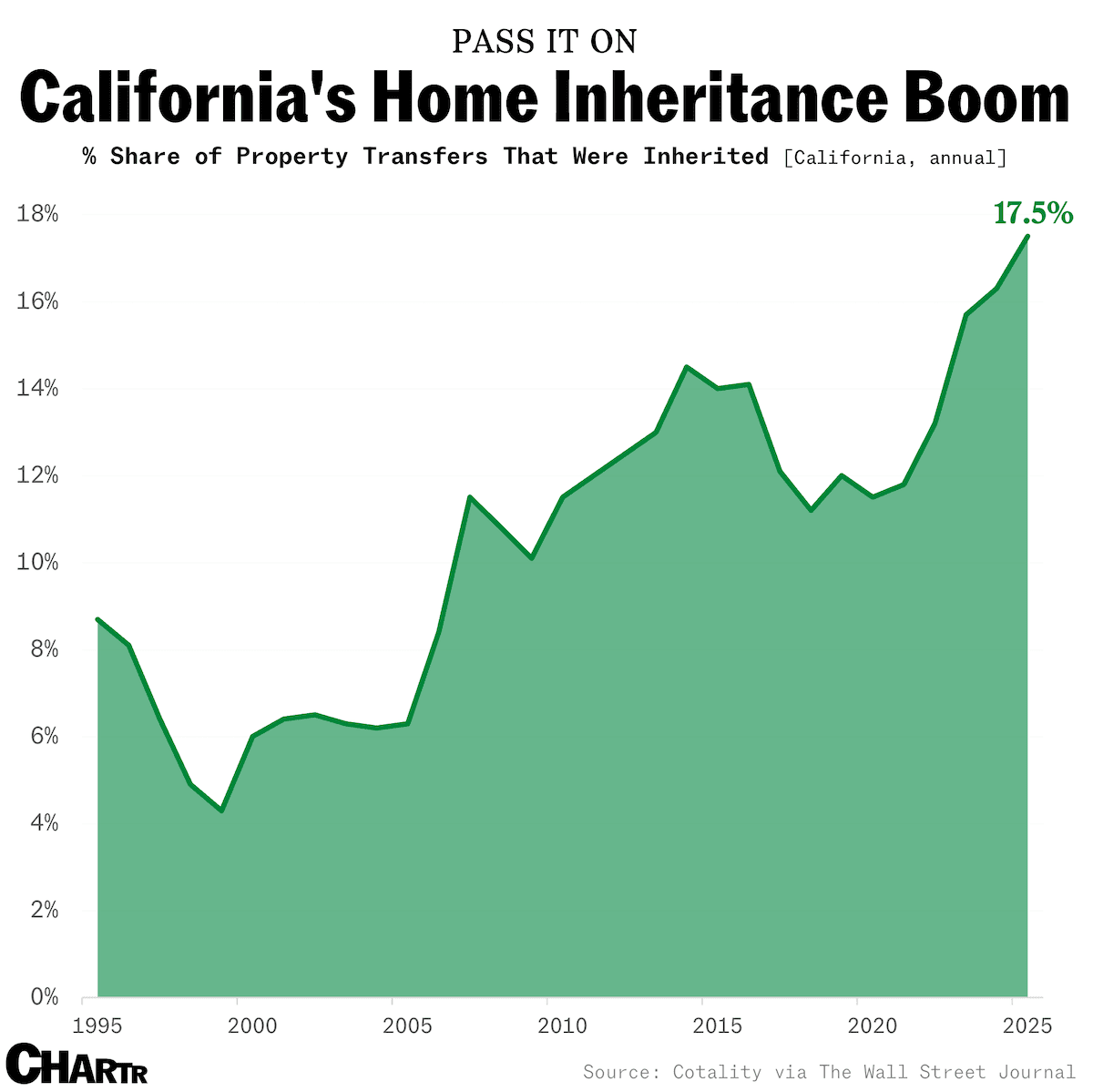
That stat is insane, but it boils down to the economics of homeownership. In a property market as hot as California’s, it’s hard for young people to compete. Salaries have not been nearly as competitive as the housing market; the later the start, the worst it is.
The recent upward trend in income gives me hope, but perhaps that’s just tech workers, and either way, it wasn’t nearly the jump that housing saw. Wages were outpaced handily.
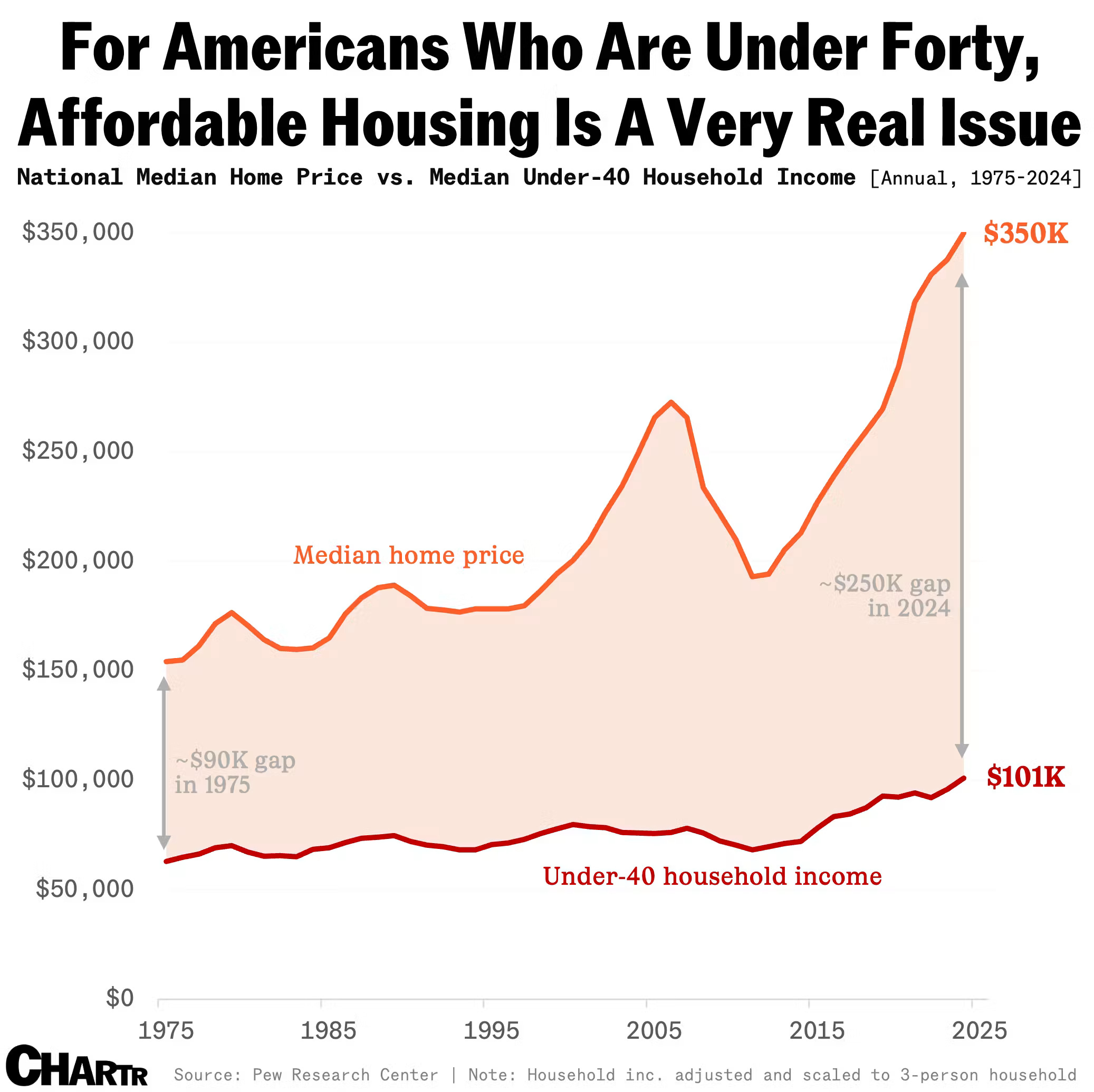
Of course, this last chart isn’t new to me. I first saw it in the infamous “WTF HAPPENED IN 1971” post. And no, the irony is not lost on me that the website is a giant Bitcoin ad, but what it’s really tracking is the same profit dynamics that are pushing the market along.
I can already hear it: that chart and TMO being long tech are related?
Yes, absolutely. The divergence between asset pricing and labor pricing is directly related to the software revolution that really began in earnest in the 1960s. The switch flipped with the launch of Unix in 1969.
But knowing that the problem isn’t that we lack the old gold standard doesn’t help me buy a home, though. The plan for that, as a Californian, is still inheritance for now.
Well, that, and being long tech stocks.
Thanks for reading.
See you next week.
Not that I tend to endorse trailing PE over forward PE, but this is a good exception.
Jack - lots to think about. You've highlighted multiple times that Tech is not homogeneous and certain things (like Meta, Amazon and Google) aren't in "tech". With that said, there is a real divergence. Future cashflows of companies like CRM and ADBE seem to be more uncertain while others like PLTR CRWD NET NOW seem to be more certain - at least that's one explanation of the divergence. Also, many semis on a forward P/E basis, like MU or NVDA look cheap- this does depend on future earnings projections, though. QQQJ looks stronger over the last year than QQQE or QQQ. The earnings moves have been violent in both directions. The SMID Nasdaq seems to be where more of the AI beneficiaries live. Having a little bit in something like GPIQ makes sense right now to harvest some of the vol and rotation. Indices can stagnate as the market rotates through subsectors. Good Luck and Godspeed.