

Jevons is the Bull Case
Shorts strangle the Nasdaq, a quick PSA about Bitcoin, and we talk AI making jobs (or not, we can't tell).

Welcome to this week’s edition of The Macro Obsession.
The best round-up of current events and trends in finance, tech, and the real economy currently in your inbox!
Issue #56—Week of July 27th, 2026
Mr. Market Hates CapEx
Hide Your Bitcoin or Get the Wrench
Propensity Check
Mr. Market Hates CapEx
Earnings season is officially underway—for those who aren’t watching my Seeking Alpha coverage where I’m doing big tech previews and reviews—and it’s not going well for anyone so far.
IBM (IBM 0.00%↑) in particular took a big hit, but Tesla (TSLA 0.00%↑), Alphabet (GOOGL 0.00%↑), and Intel (INTC 0.00%↑) followed. Intel popped on their initial earnings, but it only lasted through the overnight session.
Daylight hit and it sold off hard. Then, it continued into Friday. Dumps, dumps, dumps.
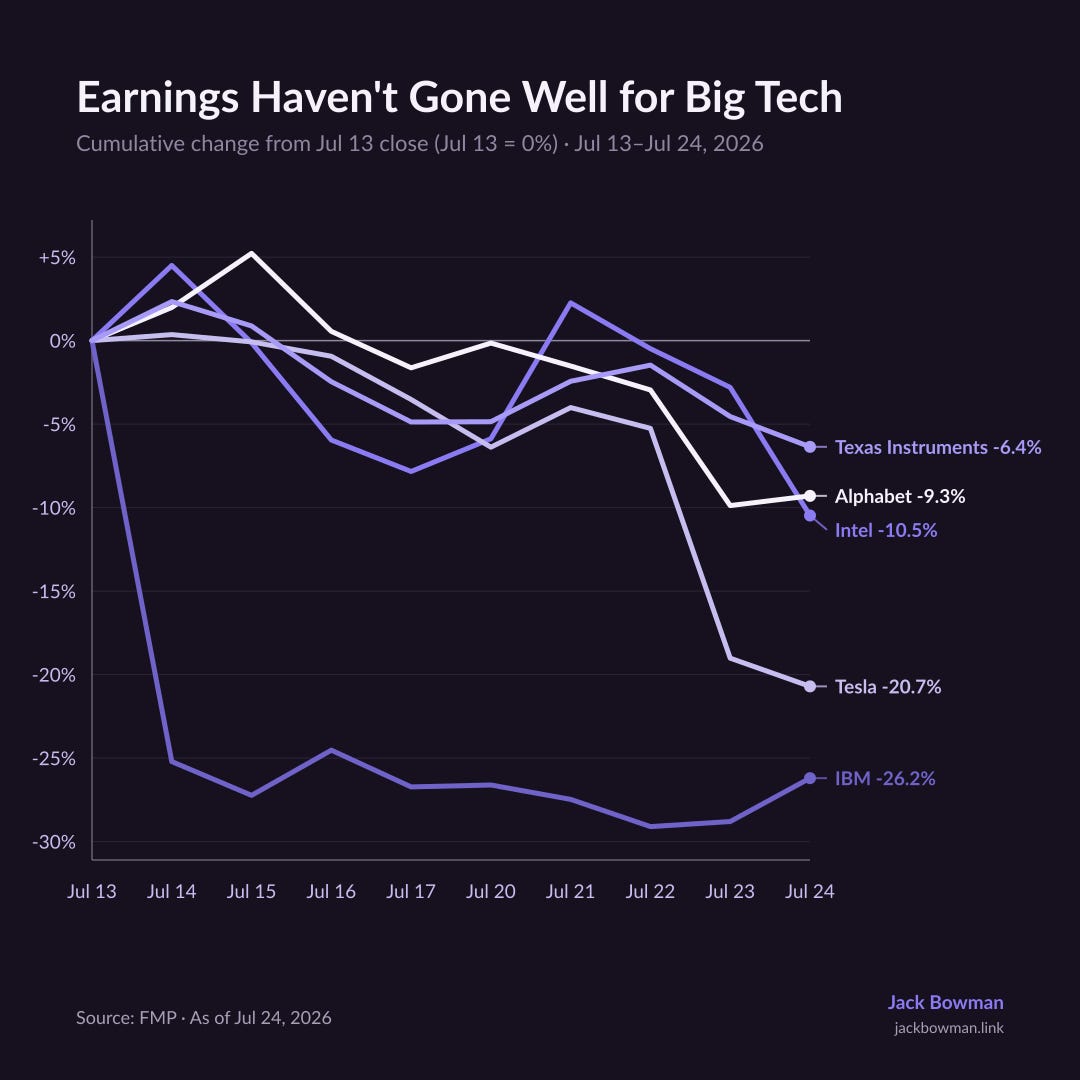
The rationale, as far as I can tell, is pretty straightforward. Companies are pulling back on AI service spending so companies should be pulling back on AI investment spending. All these companies that got hit are doing the same thing: investing more into AI investments while they cut their service spending.
It turns out, growth doesn’t matter if free cash flow is negative. I disagree, but that doesn’t always matter in investing. What matters in investing is being right, on time, and positioned well ahead of it.1
Less simply but more aptly, what matters in investing is how one is positioned for realized volatility, not implied volatility.
TMO was well positioned for this week’s volatility. The defensive rotation we made a month ago has been paying off, even though we’re still long big tech (TMO #52).
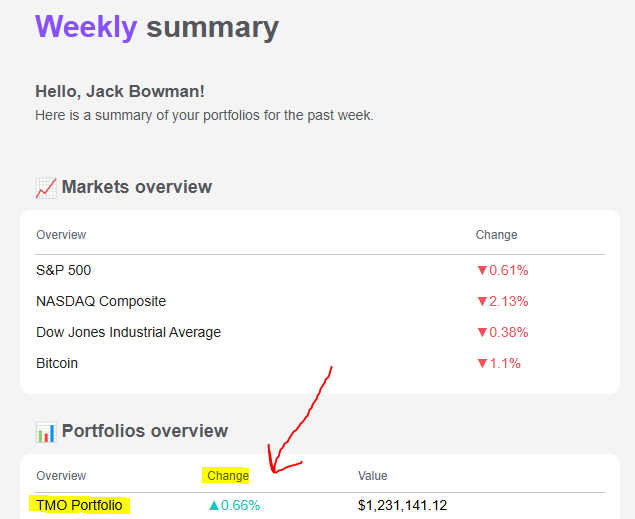
On that note, there will be another portfolio update next week. I don’t believe I’m going to make any changes just yet, but we’ll see. A week is a lot of time in this market, especially because the rest of big tech is reporting between now and then.
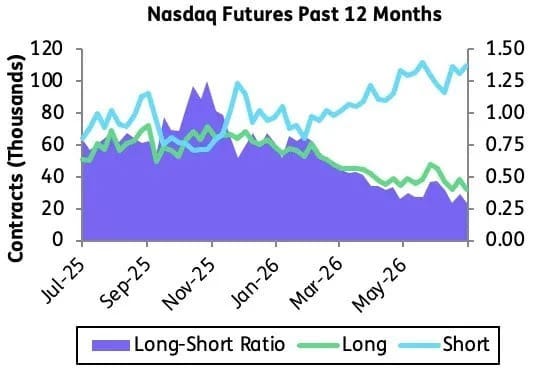
It should be of note that we’re still in a market where Nasdaq futures are nearing 4:1 short to long. That’s usually not a sign that we’ve hit a top.
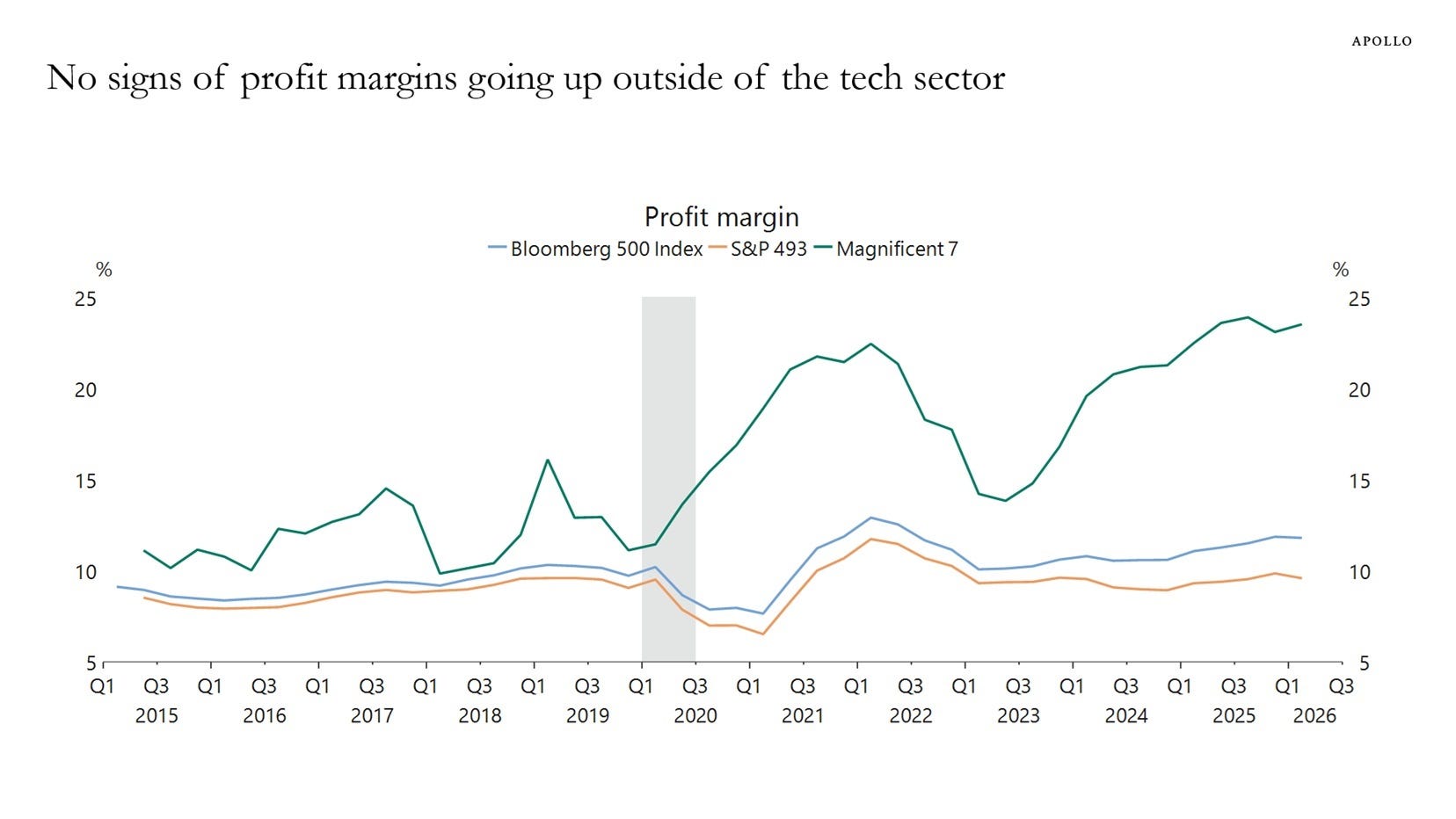
But it doesn’t really matter how much spending these tech companies do on capex. What matters is how much profit comes out of it and at what margin.
There are just no competitors to big tech in that regard. The sell-off in tech will be short-lived; it’s like fighting gravity. You can do it for a while, and we’ve gotten pretty good at it. But physics always wins—profits justify price (TMO #46).
Think TMO is neat? Send it to a buddy!
Hide Your Bitcoin or Get the Wrench
I’ve been following crypto for more than ten years at this point, so I was surprised to hear a term pop up again that I haven’t heard in a while (but it is clearly still a problem), “wrench attack.”
A wrench attack is precisely what it sounds like, a physical attack, usually with a heavy blunt instrument. These are done to kidnap or torture somebody into revealing the keys to their cryptocurrency. If you’re able to get access to their crypto wallet and transfer it to your own, then there are only a few ways to get it back, and they frequently aren’t able to.
Wrench attacks are on the rise this year compared to last year and the one before that. Note that even if Bitcoin falls 50%, that doesn’t mean fewer people are hunting for Bitcoin. I see no correlation here.
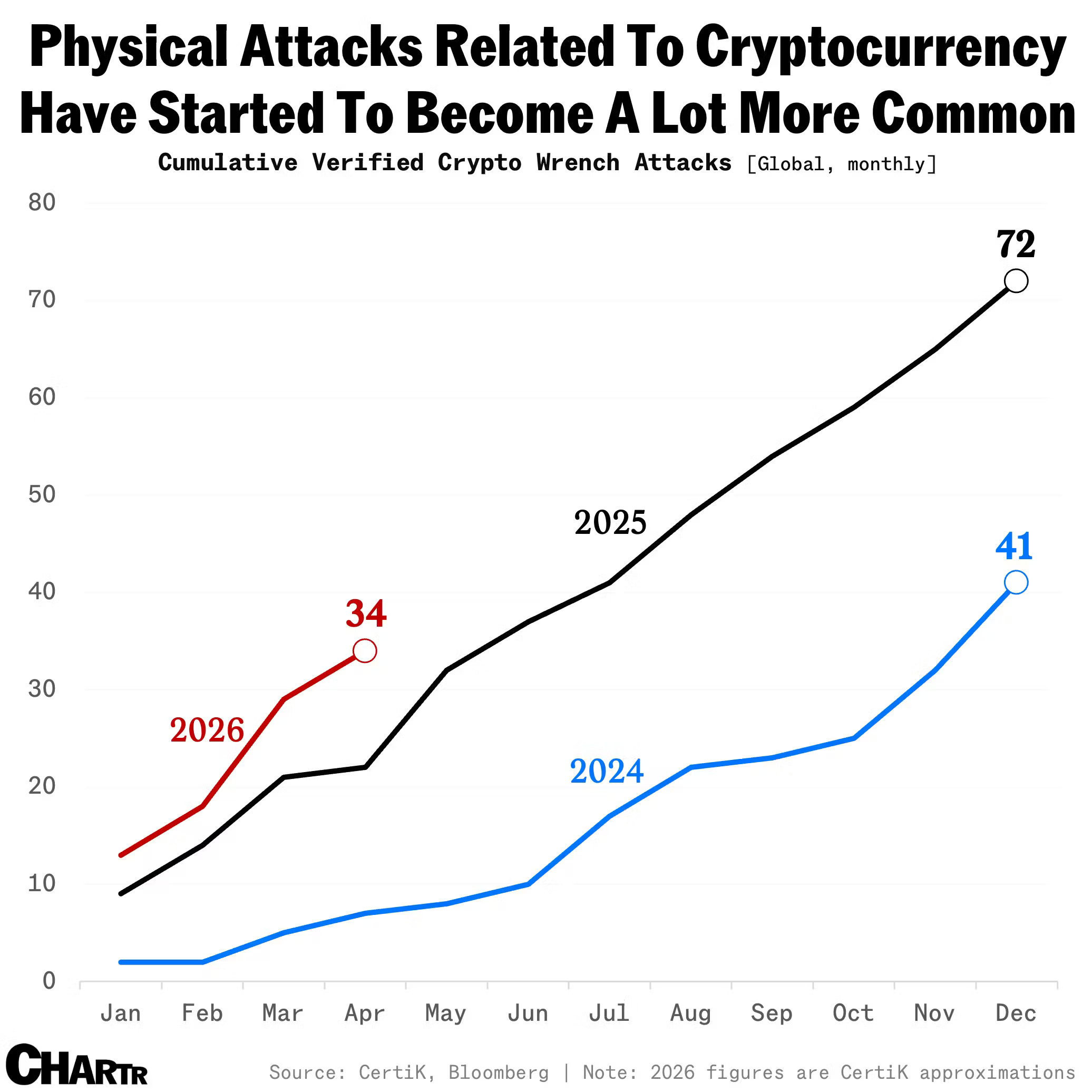
Just a reminder that if you’re still one of the people who hasn’t moved their crypto exposure to an exchange like Coinbase (COIN 0.00%↑) or through an ETF like the iShares Bitcoin Trust ETF (IBIT 0.00%↑), don’t tell anyone. And I mean A N Y O N E. Most of these wrench attacks are coming from people they know, not strangers.
Now, TMO doesn’t endorse crypto per se, but I do like to trade it from time to time.
Quick receipt: Bitcoin is up 8% from when I posted this. Pinned the low almost exactly. Lucky timing. I’m thinking we’ve got a few more weeks of grinding to go.
More Below, But ICYMI


Propensity Check
Last week in “Smaller Business, Smaller Payroll,” I discussed the impact that I believe AI is having on small businesses.
In short, the smaller the business, the more disproportionately they benefit from AI.
This chart has been backing me up, where I argue that the boom in small business applications we’re seeing is largely AI-enabled solo operators.2
Business that will never hire anyone else. We really haven’t seen much change in the high propensity category.
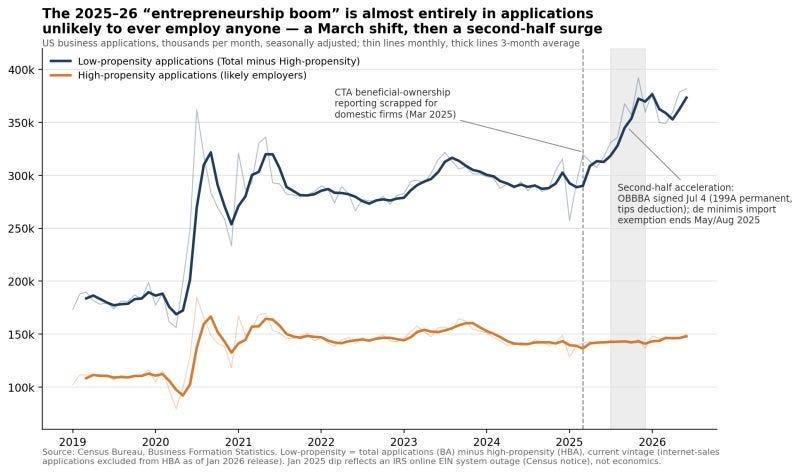
Just like the AI labor market experts are conflicted on which jobs AI tools are replacing, they are also conflicted on how to interpret the data here. Look at it another way and we’re seeing a strong upward move in high propensity job applications, still grinding higher.
The unfortunate part for economic health, and why this isn’t exactly a correction to the above chart, lies with the “with planned wages” line (see below). It’s falling and diverging, suggesting that the jobs being created are gig work or reliant on contractors. They’re planning to hire, but not pay anyone. Ouchie.
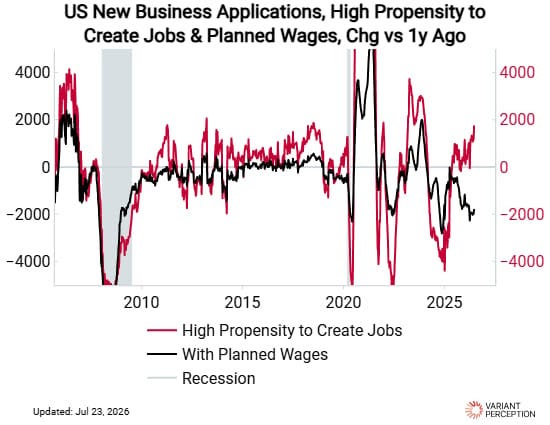
It’s not a pure negative, but it does reinforce the idea that AI productivity gains will not necessarily create jobs. I’m still on the fence here.
Maybe we don’t need to infinitely create jobs—especially now that we’ve passed peak 18-year-old. Perhaps productivity alone will be enough growth for an economy with its highest-propensity demographic having a chart that looks like this:
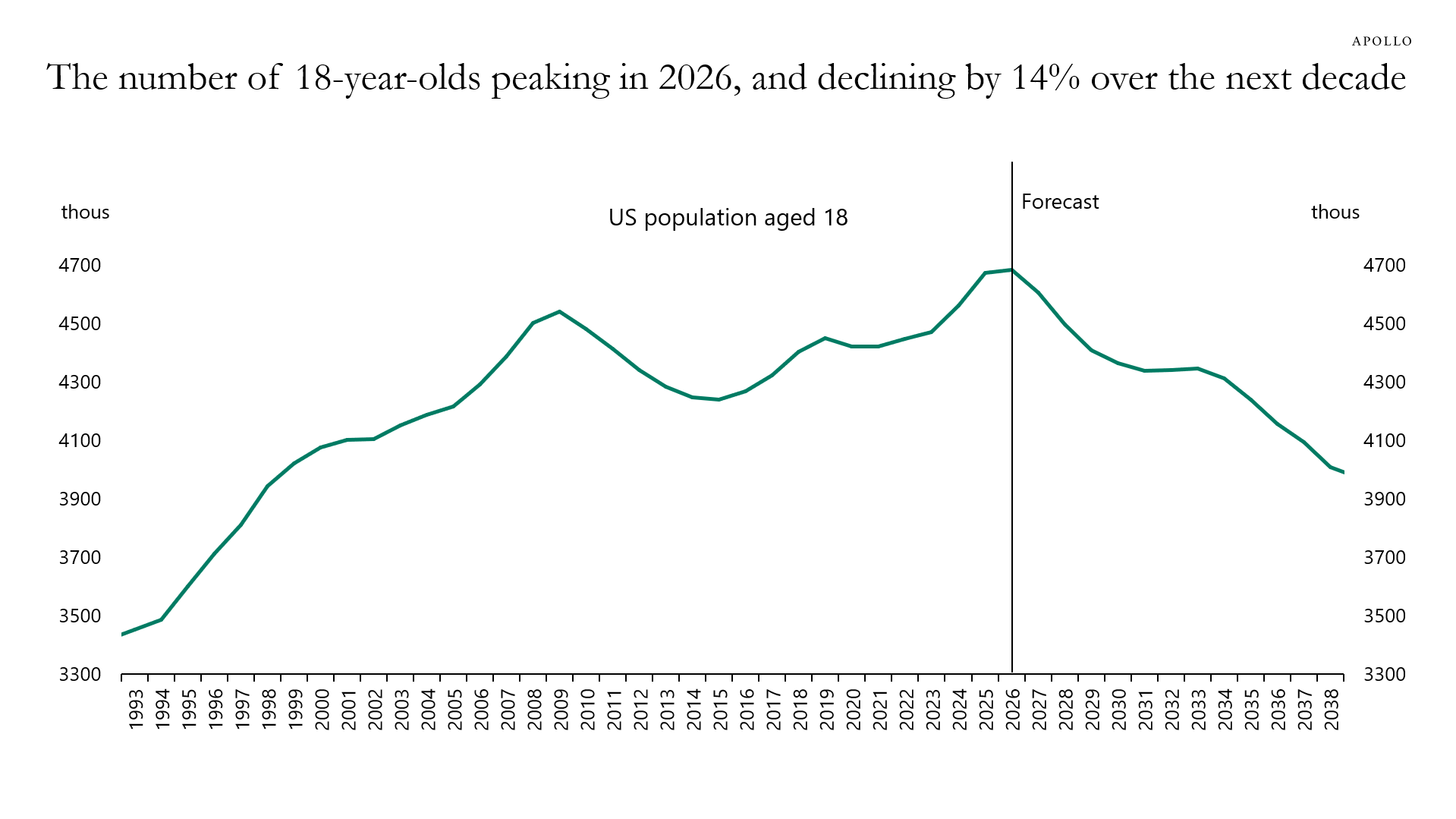
You bet we will need to rely on AI to carry us forward when we’re facing things like this; we don’t even have to look ahead, we’re already inhabiting the maintenance economy. Reminder that Jevons is the bull case, not the base case, contrary to what I sometimes suggest.
Thanks for reading.
See you next week.
See Ackman and Herbalife, Dalio and Mexico, Soros and the pound, etc.
When we did our edit pass, we got to this note and my wife said aloud, “Hello.” I can confirm; we are discussing her business, at least anecdotally. Shoutout.